
Kenya’s first Ebola case puts frontline health workers at the center of response
Kenya's first imported Bundibugyo Ebola case slipped past airport screening, putting frontline health workers at the center of early detection and response.

Kenya’s first imported case of Bundibugyo Ebola virus disease has put frontline health workers at the center of the country’s response, with health officials stressing the need for early recognition, infection prevention and rapid isolation of suspected cases.
The Ministry of Health confirmed the case on October 6 after a Kenyan man who had lived in the Democratic Republic of Congo (DRC) for seven years died in Nairobi.
The patient had been unwell for about a month and had received treatment at several hospitals in the DRC before travelling by road to Kampala and then flying to Nairobi on October 3.
He underwent routine screening at Jomo Kenyatta International Airport but was not flagged. He was later taken to Nairobi Hospital, where he presented with fever, chills, fatigue, muscle pain, painful swallowing, a sore throat and bleeding under the skin at injection sites.
He was isolated and tested positive for Bundibugyo Ebola at both the National Virology Reference Laboratory and the Kenya Medical Research Institute.
Health Services Director-General Patrick Amoth said medication the patient had taken before travelling may have contributed to him passing the screening.
“It is potentially possible that some of the medication he was taking could be able to mask some of the symptoms,” Amoth said during the October 6 briefing.
For clinicians, the episode highlights the limits of relying on screening at points of entry and the importance of maintaining suspicion when assessing patients with compatible symptoms and relevant travel histories.
The Kenya Union of Clinical Officers (KUCO), in a statement following the confirmation, said the patient’s detection after passing airport screening showed why health facilities must remain a critical part of the country’s early-warning system.
“A patient who passed port screening was ultimately identified because a clinician at a health facility suspected a viral haemorrhagic fever and acted on it,” KUCO said.
The union said Kenya had screened 652,584 travellers and tested 267 samples across five laboratories since heightened surveillance began in May. It also said 4,971 health workers had received training in Ebola prevention and management.
KUCO is now calling for accelerated training, particularly for staff in outpatient departments, casualty units, triage areas and laboratories.
The union argues that outpatient departments present a particular risk because Ebola symptoms can initially resemble common illnesses such as malaria, influenza and other febrile conditions.
Clinicians may also be exposed before a diagnosis is suspected through activities such as taking histories, examining patients, drawing blood and administering injections.
The Ministry has identified 28 contacts, including family members and health workers who attended to the patient. It is also tracing 23 passengers and four crew members who travelled on the same flight.
Health Cabinet Secretary Aden Duale said those considered at risk would be quarantined and monitored.
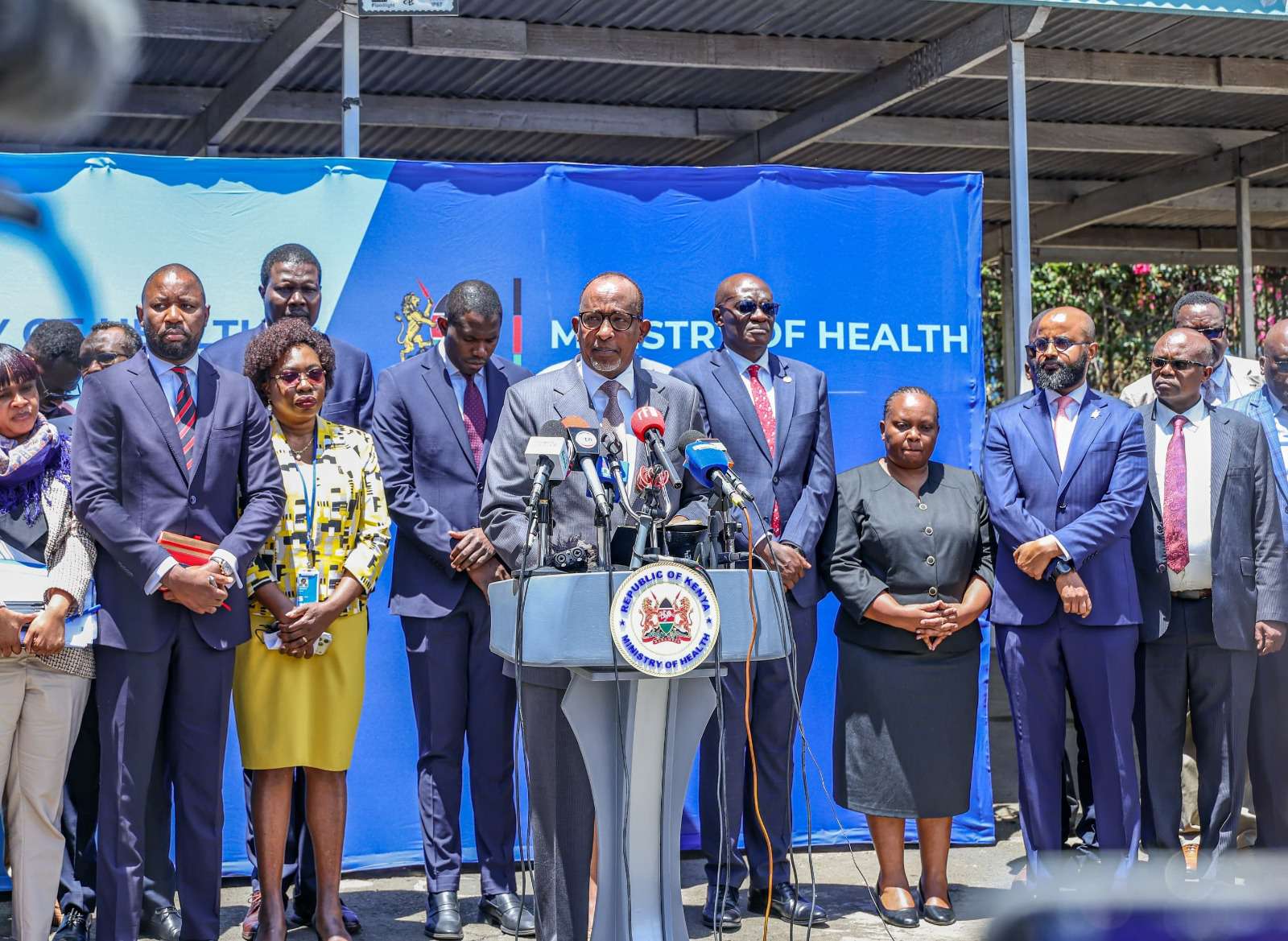
“So far, we have listed 28 contacts of the deceased,” Duale said, adding that authorities were also pursuing passengers and crew from the flight.
The Ministry has urged health workers to remain vigilant and consistently apply infection prevention and control measures. Kenya has also maintained heightened Ebola surveillance since the outbreak in the DRC began in May.
Amoth said the response should also include limiting unnecessary physical contact while authorities assess the situation.
“We are still in the response phase, and we really discourage large gatherings because they are a potential source of contact,” he said.
For health workers, however, the key concern remains the possibility of an unrecognized case presenting at an ordinary health facility.
KUCO has called for continuous availability of personal protective equipment, functional isolation areas, clear post-exposure protocols and medical and occupational insurance for frontline workers.
It is also asking that outpatient, casualty, triage, laboratory and records staff in high-risk counties receive targeted training within 14 days, with other counties following within 30 days.
The Ministry says Kenya currently has 15 isolation and treatment units and plans to expand capacity to 22 facilities, while more than 4,971 healthcare providers have already been trained in Ebola prevention and case management.
For clinicians, the imported case therefore serves as a reminder that Ebola preparedness cannot stop at airports and border crossings. A patient may arrive at a health facility after travelling through several locations, and recognition at the point of care may determine how quickly the chain of transmission is interrupted.
Comments (0)